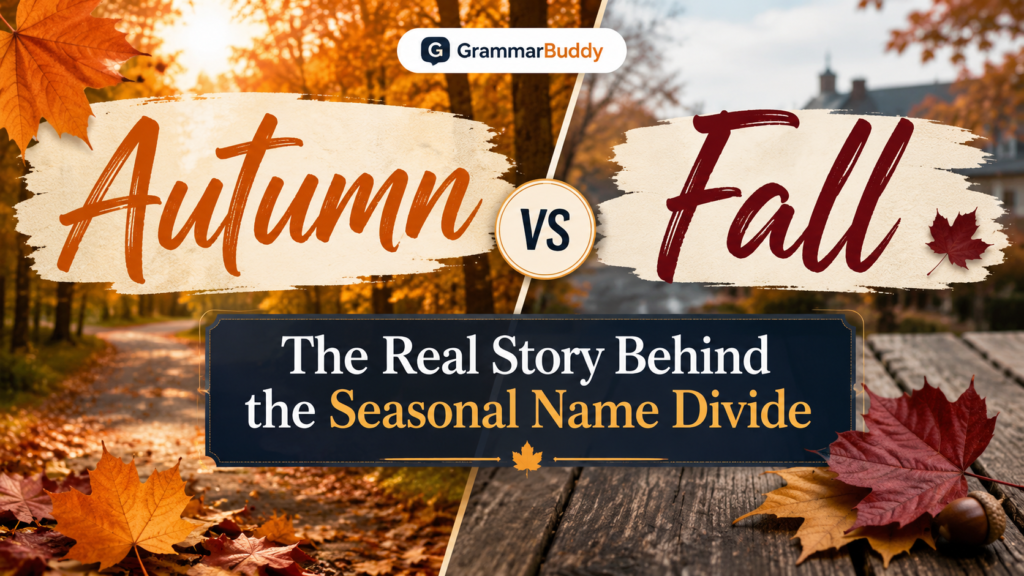

The debate between Autumn vs Fall is more than just a difference in vocabulary—it reflects history, culture, and language evolution. Both terms describe the same beautiful season marked by colorful leaves, cool weather, and harvest time, yet their usage varies across regions. In American English, the word fall season is more common, while British English prefers the term autumn season. This difference often confuses learners and writers trying to choose the correct word.
Interestingly, both autumn meaning and fall meaning originate from poetic descriptions of the season. The term autumn comes from Latin roots, giving it a more formal and classical tone. On the other hand, fall became popular due to the phrase fall of leaves, making it feel more natural and vivid. Today, both terms are correct, and choosing between autumn vs fall differences often depends on your audience and writing style.
Understanding the distinction helps improve your English vocabulary, enhances your writing clarity, and ensures better communication. Whether you prefer the elegance of autumn or the simplicity of fall, both capture the essence of a season filled with golden landscapes, cozy vibes, and seasonal transitions.
Autumn vs Fall: Is There Actually a Difference?
Here’s the short answer: there is no difference in meaning.
Both autumn and fall refer to the season between summer and winter. Leaves change color. Temperatures drop. Days get shorter.
However, the difference lies in usage, tone, and geography.
Quick Comparison Table
| Feature | Autumn | Fall |
| Meaning | Same season | Same season |
| Origin | Latin → French → English | Old English phrase |
| Tone | Formal, poetic | Casual, conversational |
| Popular Regions | UK, Europe, global English | United States, Canada |
| Usage Context | Literature, academic writing | Daily speech, media |
In simple terms, “autumn” sounds refined, while “fall” feels natural and relaxed.
The Origins of “Autumn” — A Word Rooted in History
The word autumn carries a long, elegant history.
It traces back to the Latin word autumnus. Later, it passed into Old French as automne. By the 14th century, it entered English and gradually became a standard term.
Why “Autumn” Sounds Formal
There’s a reason autumn feels more sophisticated. It came through academic and literary traditions, not everyday speech.
Writers, poets, and scholars favored it. Over time, it gained a polished, almost artistic tone.
“Season of mists and mellow fruitfulness…”
— John Keats, To Autumn
That single line shaped how millions perceive the word today.
Key Takeaways About “Autumn”
- Derived from Latin and French roots
- Popular in formal writing and literature
- Common in British English and international usage
- Often linked with poetry and imagery
The Origins of “Fall” — A Word Born from Daily Life
Unlike “autumn,” the word fall didn’t come from scholars. It came from people describing what they saw.
Back in 16th-century England, people used phrases like:
- “fall of the leaf”
- “fall of the year”
Over time, those phrases shortened to just “fall.”
Why “Fall” Stuck in America
When British settlers moved to North America, they brought the term “fall” with them.
Meanwhile, England began favoring “autumn” as the more “proper” term.
That’s how the split happened.
Key Facts About “Fall”
- Originates from descriptive English phrases
- Became common around the 1500s
- Dominates in American English today
- Feels simple, direct, and visual
Autumn vs Fall: Why the US and UK Use Different Terms
Language doesn’t stay still. It evolves with culture, geography, and identity.
The Timeline of Change
- Before the 1600s: Both “autumn” and “fall” used in England
- After colonization: Americans kept “fall”
- Modern Britain: Shifted toward “autumn”
- Today: Clear regional preferences exist
Cultural Influence on Language
Americans often prefer shorter, simpler words. Think:
- Elevator (US) vs Lift (UK)
- Apartment (US) vs Flat (UK)
“Fall” fits that pattern. It’s quick. It’s vivid.
Meanwhile, British English leans toward tradition and formality, which keeps “autumn” in favor.
Which Is Correct: Autumn or Fall?
Here’s the truth: both are 100% correct.
No grammar rule says one is better than the other.
When to Use “Autumn”
Use autumn when you want:
- A formal tone
- Academic or professional writing
- Literary or poetic expression
- A global audience outside the US
When to Use “Fall”
Use fall when you want:
- A casual tone
- Everyday conversation
- US-based audiences
- Clear, simple language
Quick Decision Guide
| Situation | Best Choice |
| Blog for US readers | Fall |
| Academic paper | Autumn |
| Poetry or storytelling | Autumn |
| Social media post | Fall |
Tone and Perception: What Your Word Choice Says
Words carry subtle signals. Choosing autumn vs fall can change how your message feels.
Autumn Feels Like:
- Elegant
- Thoughtful
- Nostalgic
- Literary
Fall Feels Like:
- Friendly
- Simple
- Modern
- Direct
Real Example
- “Autumn leaves drift across the quiet road.”
- “Leaves fall across the road.”
Same idea. Completely different mood.
Read More: On a Wing and a Prayer – Meaning, Origin, Examples & Real-Life Usage
Global Usage: Autumn vs Fall Around the World
English isn’t limited to one country. Different regions prefer different terms.
Global Comparison Table
| Country/Region | Preferred Term |
| United States | Fall |
| Canada | Fall (Autumn also used) |
| United Kingdom | Autumn |
| Ireland | Autumn |
| Australia | Autumn |
| New Zealand | Autumn |
| India | Autumn |
Important Insight
Even in the US, “autumn” still appears in formal writing.
And globally, most English speakers recognize both terms easily.
How Literature and Media Shaped “Autumn” and “Fall”
Words gain power through storytelling.
Autumn in Literature
Classic writers favored “autumn” for its rhythm and elegance:
- Shakespeare used seasonal imagery tied to aging and time
- Keats turned autumn into a symbol of beauty and decay
- Modern novels still use it to evoke mood
Fall in Media
“Fall” dominates in:
- News headlines
- TV shows
- Marketing campaigns
Example:
- “Fall Sale Starts Now!”
- “Top Fall Fashion Trends”
It’s short. It grabs attention.
Tip: Autumn vs Fall — Which Keyword Should You Use?
If you’re writing online, word choice affects visibility.
Search Behavior Insight
- “Fall” gets higher searches in the US
- “Autumn” performs better internationally
Best Strategy
Use both naturally:
- Title: “Autumn vs Fall”
- Headings: include variations
- Content: mix both terms
This approach helps you reach a broader audience.
Common Mistakes About Autumn vs Fall
Let’s clear up a few myths.
Misconceptions
- ❌ “Autumn is more correct than fall”
- ❌ “Fall is slang”
- ❌ “Only Americans use fall”
Reality
- Both words are historically valid
- Both appear in dictionaries worldwide
- Choice depends on context, not correctness
Side-by-Side Comparison: Autumn vs Fall
Here’s a clear breakdown you can reference anytime:
| Feature | Autumn | Fall |
| Meaning | Season between summer and winter | Same |
| First Use | 14th century | 16th century |
| Origin | Latin/French | English phrase |
| Tone | Formal, poetic | Casual, everyday |
| Regions | UK, global | US, Canada |
| Best Use | Writing, literature | Conversation, media |
Real-Life Examples of Autumn vs Fall Usage
Seeing words in context makes everything clearer.
Formal Context (Autumn)
- “The research was conducted during autumn.”
- “Autumn brings a shift in agricultural patterns.”
Casual Context (Fall)
- “I love fall weather.”
- “We’re planning a fall trip.”
Mixed Context
Many people switch between both without noticing:
- “Fall is coming, and autumn colors are everywhere.”
Case Study: Branding and Word Choice
Big brands choose words carefully.
Example: Retail Industry
- US brands say “Fall Collection”
- UK brands prefer “Autumn Collection”
Why?
Because language builds connection with the audience.
Using the wrong term can feel slightly off. Not wrong, just unfamiliar.
Final Verdict: Does It Really Matter?
Here’s the honest answer: not as much as you think.
Both words are correct. Both are widely understood.
What matters is context.
- Writing for a global audience? Use “autumn” or both
- Speaking casually in the US? “Fall” fits naturally
- Want a poetic tone? Choose “autumn”
Language isn’t rigid. It adapts.
Conclusion
In the end, the choice between autumn vs fall comes down to preference and context. Both words are correct and widely understood, but their usage depends on regional language differences. If you’re writing for a global or British audience, autumn may sound more appropriate. For American readers, fall feels more natural. What matters most is consistency and clarity in your writing.
FAQs
What is the difference between autumn and fall?
There is no difference in meaning. Both refer to the same season between summer and winter; only regional usage varies.
Which is more correct: autumn or fall?
Both are correct. Autumn is more common in British English, while fall is used in American English.
Why do Americans say fall instead of autumn?
The term fall comes from the phrase fall of leaves, which became popular in early American English.
Is autumn more formal than fall?
Yes, autumn often sounds more formal and is commonly used in literature and academic writing.
Can I use autumn and fall interchangeably?
Yes, you can use both interchangeably, but it’s best to stay consistent based on your audience.