
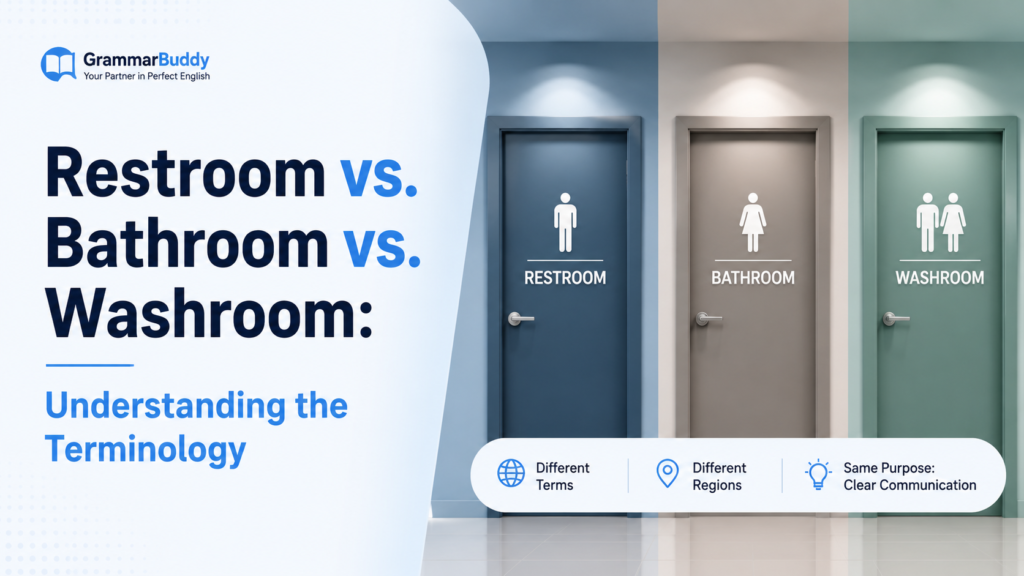

The terms Restroom vs. Bathroom are often used interchangeably, but they have different meanings depending on language, culture, and context. In American English, a restroom typically refers to a public restroom found in malls, restaurants, airports, and offices, designed for quick and hygienic use. On the other hand, a bathroom usually refers to a private room in a home that includes a bathtub or shower for personal cleaning and relaxation.
In British English, people more commonly use words like toilet, lavatory, or WC, while washroom is also used in some regions. Understanding these differences is important for travelers, writers, and English learners who want to use the correct term in the right situation. The concept of restroom etiquette, sanitation, and hygiene facilities also plays a key role in public spaces, ensuring cleanliness and comfort for users.
Whether you call it a bathroom, restroom, or washroom, the purpose remains the same: providing a clean and private space for personal needs. However, the naming convention changes based on region, formality, and context, making this a common source of confusion in English vocabulary.
Restroom vs. Bathroom vs. Washroom Understanding the Terminology at a Glance
Before diving deep, here is a simple breakdown that clears most confusion instantly.
| Term | Common Region | Typical Setting | Tone Level | Meaning Focus |
| Bathroom | United States | Homes, informal settings | Casual | Room with bathing facilities |
| Restroom | United States | Public places | Polite, neutral | Place to “rest” privately |
| Washroom | Canada, some formal settings | Public buildings, institutions | Polite, formal | Place for washing hands and hygiene |
At first glance, they seem interchangeable. In real life, they are not always used the same way.
Why the Terminology of Restroom vs Bathroom vs Washroom Matters
You might think this is just vocabulary trivia. It is more practical than that.
These words matter because they affect:
- How polite you sound
- Whether people understand you instantly
- How natural your speech feels in different countries
- How comfortable you appear in social settings
For example, asking “Where is the bathroom?” in an American restaurant feels normal. Saying the same in a formal office might feel slightly informal.
On the other hand, asking for a “washroom” in the United States might confuse people in some regions.
Language is not just grammar. It is also culture in motion.
What “Bathroom” Really Means in Everyday English
The word bathroom is the most flexible but also the most misunderstood term.
Core meaning
Originally, it referred to a room with a bathtub or shower. That meaning still exists in homes.
Today, especially in American English, it usually means:
- A private room in a house
- A room that includes a toilet and sink
- Sometimes even a public restroom in casual speech
Why it can be confusing
In many public spaces, there is no actual bath. Yet people still say bathroom.
This creates a mismatch between literal meaning and everyday usage.
Where you will hear it
- At home: “I am in the bathroom.”
- In casual conversation: “Where is your bathroom?”
- In some restaurants or small businesses
Simple example
If you are at a friend’s house, you will almost always say:
“Can I use your bathroom?”
It feels natural, relaxed, and widely accepted.
What “Restroom” Really Means in American English
The word restroom is very American in style. It is commonly used in public spaces and businesses.
Why it exists
The term was designed to sound more polite and less direct than “toilet.” It softens the language for public interaction.
Where it is used
You will find “restroom” in:
- Airports
- Shopping malls
- Restaurants
- Offices
- Theaters
Tone and intention
Restroom is considered:
- Neutral
- Professional
- Public-friendly
Real-life scenario
If you ask a staff member in a US restaurant:
“Excuse me, where is the restroom?”
They will understand immediately without hesitation.
Interesting fact
Many American businesses prefer “restroom” on signage because it avoids direct reference to bodily functions. It keeps communication clean and socially comfortable.
What “Washroom” Means and Why It Feels Different
The term washroom is strongly associated with Canada, though it appears in some formal international environments.
Core idea
Washroom focuses on hygiene. The word “wash” highlights cleanliness rather than function.
Where it is most common
- Canada (primary usage)
- Government buildings
- Universities
- Some international organizations
Why Canada uses it more
Canadian English often blends British and American influences. “Washroom” became a polite middle ground that avoids sounding too casual or too blunt.
Example in Canada
If you are in Toronto, you will naturally hear:
“Could you tell me where the washroom is?”
It sounds polite, neutral, and completely normal.
Regional Differences in Real Life Usage
Language changes depending on where you are. This is where confusion usually starts.
United States
- Bathroom → home or informal use
- Restroom → public places
Canada
- Washroom → public places
- Bathroom → homes
United Kingdom
- Toilet → very common and direct
- Lavatory → formal or older usage
- Washroom → rare but understood
Australia and others
- Toilet → most common
- Bathroom → sometimes used in homes
Key insight
There is no global single word. Each region developed its own polite version.
Formality Levels: Which Word Sounds Polite or Casual
Not all words feel the same in conversation.
Bathroom
- Casual
- Friendly
- Common in homes
Restroom
- Neutral
- Polite in public
- Safe choice in the US
Washroom
- Slightly formal
- Clean, institutional tone
- Common in Canada
Toilet (bonus comparison)
- Direct
- Very common in the UK
- Can sound blunt in the US
Quick example
If you say “toilet” in an American restaurant, people will understand you. However, it may feel less polite than “restroom.”
Cultural Sensitivity and Social Context
This topic is not just about vocabulary. It connects with how people perceive politeness.
Why businesses care about wording
Hotels, airports, and restaurants choose words carefully. They want:
- Guests to feel comfortable
- Language to stay neutral
- Communication to avoid awkwardness
Real-world example
A tourist once asked in a US café:
“Where is your toilet?”
The staff understood but responded more formally, pointing them to the “restroom.”
The meaning did not change. The tone did.
Simple truth
People respond better when language matches local expectations.
Read More: Shed Some Light On – Definition, Meaning, and Examples (Complete Guide)
Practical Guide: What to Say in Different Situations
Here is a real-life cheat sheet you can actually use.
At home
- Say: bathroom
- Example: “I am going to the bathroom.”
In the United States (public places)
- Say: restroom
- Example: “Excuse me, where is the restroom?”
In Canada
- Say: washroom
- Example: “Where is the washroom?”
In the United Kingdom
- Say: toilet
- Example: “Where is the toilet?”
When traveling globally
If unsure, use:
- “restroom” (safest in most international settings)
Common Mistakes People Make
Even fluent speakers get this wrong sometimes.
Mistake 1: Using bathroom everywhere
It works in many cases, but not always in formal international settings.
Mistake 2: Assuming washroom is universal
It is not widely used outside Canada.
Mistake 3: Avoiding “toilet” unnecessarily
In the UK, “toilet” is perfectly normal.
Mistake 4: Overthinking it
Most people will still understand you regardless of word choice.
Memory Trick to Remember the Differences
Here is an easy way to lock it in your mind:
- Bathroom = home and comfort
- Restroom = public and polite (US)
- Washroom = clean and Canadian
- Toilet = direct and UK-style
Think of it like travel settings on a phone. Each region switches a different default.
Case Study: Language Confusion in Tourism
A small case from hospitality training highlights why this matters.
Scenario
A European traveler in New York City asked:
“Where can I find the toilet?”
Outcome
Staff understood but immediately switched to formal American phrasing.
They responded:
“The restroom is just down the hall.”
What happened here
- No misunderstanding occurred
- Tone adjustment happened instantly
- Both sides stayed respectful
Lesson
Words do not block communication. Tone shapes it.
Interesting Linguistic Insight: Why These Words Exist
Language evolves based on social comfort.
- “Bathroom” softened references to bodily functions
- “Restroom” created a public-friendly alternative
- “Washroom” emphasized cleanliness
- “Toilet” stayed direct and practical in British English
This is a perfect example of how societies shape language to reduce discomfort in public conversation.
Quick Reference Table for Everyday Use
| Situation | Best Word to Use |
| Home in US | Bathroom |
| Public place in US | Restroom |
| Canada | Washroom |
| UK | Toilet |
| International travel | Restroom (safe choice) |
Conclusion
In summary, the difference between restroom vs. bathroom mainly comes down to usage and cultural context. While “bathroom” is more common in homes, “restroom” is widely used for public facilities in American English. Understanding these terms helps avoid confusion in both spoken and written communication, especially when traveling or learning English.
Faqs
What is the difference between a restroom and a bathroom?
A restroom is usually a public facility, while a bathroom is a private room in a home with bathing amenities.
Why is it called a restroom?
It is called a restroom as a polite term for public toilet facilities.
Is bathroom American or British English?
“Bathroom” is used in both, but Americans use it more for homes, while British English prefers “toilet” or “WC.”
What is another word for restroom?
Other words include washroom, lavatory, and public toilet.