
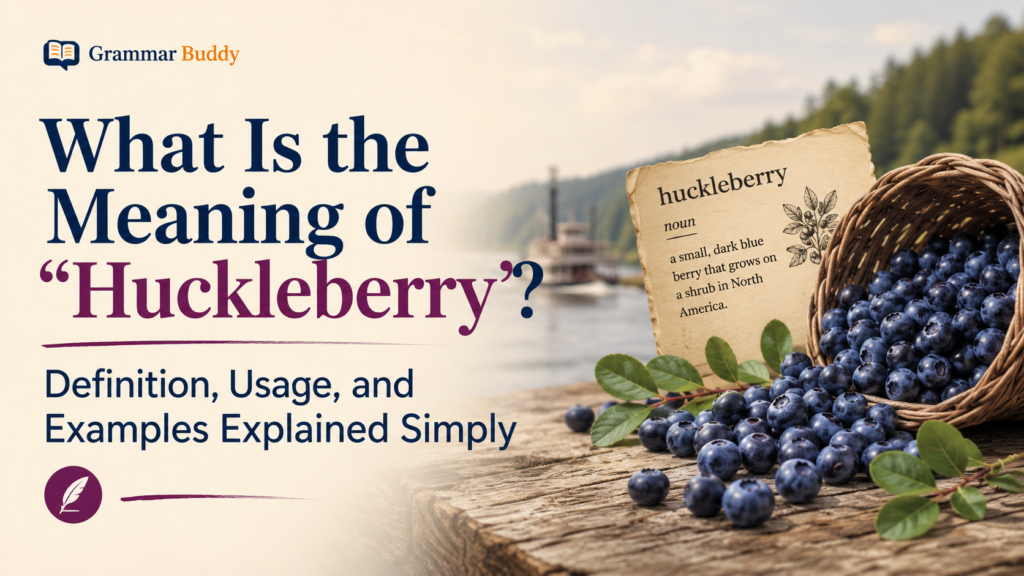

The term “Huckleberry” has an interesting history and multiple layers of meaning in English language and culture. In its most basic sense, a huckleberry is a small, round, edible wild berry that closely resembles a blueberry and is commonly found in North America. These berries grow on shrubs in forests and mountainous regions and are known for their sweet and slightly tart flavor. However, the phrase goes beyond botany and is often used in literature and everyday speech. In popular culture, especially in classic American literature, the word gained recognition through characters like “Huckleberry Finn,” symbolizing a free-spirited and adventurous personality.
The meaning of huckleberry can also vary in slang usage, where it sometimes refers to someone who is just the right person for a particular task. This expression adds a deeper cultural layer to the word, making it more than just a fruit name. Other related LSI keywords include wild berry, edible fruit, Huckleberry Finn meaning, slang expression, forest berry, blueberry-like fruit, and American literature symbolism. Understanding the term helps in grasping both its literal and figurative significance in language.Overall, the word “Huckleberry” blends nature, culture, and language, making it a unique and meaningful term worth exploring in detail.
What Does “Huckleberry” Mean in Simple Language?
The word huckleberry has two main meanings, and context decides everything.
- A wild berry that grows in forests
- A slang expression meaning “I’m the right person for the job”
That second meaning is the one people usually search for today.
So when someone uses the word in conversation, they are often not talking about fruit. They are talking about confidence, readiness, or capability.
In short:
- Nature: it’s a small edible berry
- Slang: it means “I’ve got this”
Simple, but surprisingly layered.
The Literal Meaning of Huckleberry (The Fruit Side)
Let’s start with the real plant.
A huckleberry is a small wild berry that grows mainly in North America. You’ll find it in mountain regions, forests, and high-altitude areas.
It looks like a blueberry, but don’t get fooled—they’re not the same.
Key characteristics of huckleberries:
- Small, round berries (red, blue, or dark purple)
- Grows on wild shrubs rather than farms
- Sweet but slightly tangy flavor
- Common in the Pacific Northwest and Rocky Mountains
People often pick them in the wild, especially in summer.
Huckleberry vs Blueberry (quick clarity)
| Feature | Huckleberry | Blueberry |
| Growth | Wild shrubs | Farmed bushes |
| Taste | Stronger, tangier | Milder, sweeter |
| Size | Smaller | Slightly larger |
| Seeds | Noticeable | Almost invisible |
So yes, it’s a real fruit—but not the reason the word became famous in everyday language.
The Famous Slang Meaning: “I’m Your Huckleberry”
Now we get to the phrase people actually search for.
When someone says “I’m your huckleberry,” they are saying:
“I’m the right person for the job.”
It can also mean:
- “I can handle this situation”
- “I’m exactly who you need”
- “Challenge accepted”
It’s not casual filler. It carries confidence and certainty.
You might hear it when someone wants to show they’re capable or ready without hesitation.
Tone behind the phrase
Depending on how it’s said, it can feel:
- Calm and confident
- Slightly playful
- Bold or even confrontational
- Old-fashioned but powerful
It’s one of those phrases where delivery matters just as much as meaning.
Where Did “Huckleberry” as a Phrase Come From?
This expression didn’t start in movies or pop culture. It goes back much further.
In 19th-century American slang, “huckleberry” was used to describe something small but suitable or appropriate.
Over time, it evolved into a symbolic idea:
the perfect match for a task or role
Some historical dictionaries and linguistic studies suggest it was used to mean “just the right person” or “a suitable candidate.”
So when someone says “I’m your huckleberry,” they’re basically saying:
“I fit this role perfectly.”
How a Western Movie Turned It Into a Famous Line
The phrase became widely known thanks to the 1993 film Tombstone, where the character Doc Holliday says:
“I’m your huckleberry.”
In that scene, it doesn’t sound soft or friendly. It sounds sharp, controlled, and confident.
That moment gave the phrase a new life in pop culture.
Why that movie mattered:
- It reintroduced old Western slang to modern audiences
- It gave the phrase a confident, almost intimidating tone
- It made “huckleberry” iconic in American film history
After that, people started using it in everyday speech, often without knowing its older origins.
Pop Culture Usage Beyond the Movie
After Tombstone, the phrase started appearing in different places:
- TV shows referencing Western-style confidence
- Sports commentary (players “stepping up”)
- Online memes and social media captions
- Casual jokes among friends
Even today, it still shows up when someone wants to sound confident in a slightly dramat
Read More: No Longer Exist or No Longer Exists – Which Is Correct?
Real-Life Examples of How to Use “Huckleberry”
Let’s make it practical. Here’s how people actually use it in conversation.
Literal usage (about the fruit)
- “We went hiking and picked fresh huckleberries near the trail.”
- “Huckleberry pie tastes amazing in the summer.”
Slang usage (confidence meaning)
- “Need someone to fix the issue? I’m your huckleberry.”
- “You think you can beat me? I’m your huckleberry.”
- “They asked for a leader, and he said he was their huckleberry.”
Casual conversation examples
- Friend: “Who’s going to help with the project?”
You: “I guess I’m your huckleberry.” - Boss: “We need someone to handle this fast.”
You: “I’m your huckleberry.”
It’s flexible, but it always carries confidence.
Common Misunderstandings About the Word
Many people get confused about “huckleberry.” Here are the biggest mistakes:
Mistaking it as only a fruit
Yes, it’s a berry—but slang usage is often more important in conversation.
Thinking it means “carefree” or “cute”
It doesn’t. The phrase often signals capability, not sweetness.
Using it in formal writing
It’s not ideal for professional documents or serious business communication.
Assuming it has a modern origin
It actually comes from older American slang, not recent internet culture.
When You Should Use “Huckleberry” (and When You Shouldn’t)
Let’s be real—this phrase isn’t for every situation.
Good times to use it:
- Casual conversations
- Friendly challenges
- Humor or playful confidence
- Pop culture references
Avoid using it when:
- Writing formal emails
- Speaking in serious professional settings
- Talking to people unfamiliar with the phrase
- Clarity matters more than style
It’s fun, but it can confuse people if the context isn’t right.
Related Expressions That Mean Something Similar
If “huckleberry” feels too old-fashioned, here are modern alternatives:
- “I’ve got this”
- “I’m the right person for the job”
- “Count me in”
- “Leave it to me”
- “I’m your guy” / “I’m your person”
Quick comparison
| Phrase | Tone |
| I’m your huckleberry | Confident, old-school, dramatic |
| I’ve got this | Modern, casual |
| I’m the one you need | Direct and professional |
Quick Summary: What “Huckleberry” Really Means
Let’s simplify everything:
- It’s a real berry found in North America
- It became a slang phrase for capability and readiness
- It means: “I’m the right person for the job”
- It gained popularity through Western culture and film
- It still appears in casual speech today
If you remember one thing, make it this:
“Huckleberry” isn’t just a fruit—it’s a confident way of saying you’re the right fit.
Conclusion
In conclusion, the word Huckleberry is more than just the name of a wild berry. It represents a blend of natural identity and cultural symbolism. From its role as an edible wild fruit to its use in literature and slang expressions, it carries both literal and figurative meanings.
Whether referring to a forest-growing berry or a “perfect match” for a task, the term reflects richness in the English language. Understanding its meaning helps improve vocabulary and cultural awareness.
FAQs
What is the simple meaning of Huckleberry?
A huckleberry is a small wild berry similar to a blueberry that grows in forests and mountainous areas.
Is Huckleberry a fruit or slang?
It is both a fruit and a slang term used to describe someone suited for a task.
Where do Huckleberries grow?
They mainly grow in North America in wild forest regions and high-altitude areas.
What does “I’m your huckleberry” mean?
It means “I am the right person for the job or challenge.”
Are Huckleberries healthy?
Yes, they are rich in antioxidants, vitamins, and nutrients beneficial for health.